Daniel McNally
Interview by Nicola Nosengo, NCCR MARVEL, April 2025.
What was your role in NCCR MARVEL, and what did you focus on at the time?
I was at the Paul Scherrer Institut, more specifically working at the Swiss Light Source. I was working with Thorsten Schmitt, who manages a team on spectroscopy of quantum materials, and I was both doing my experiments and helping users who came to use the advanced resonant spectroscopies beamline (ADRESS). One of the reasons I moved to PSI after my PhD at the Brookhaven Labs in the USA was that ADRESS was a pioneering instrument. I knew that several other instruments of this type were going to be built during the time of my postdoc, so I chose to go there an learn from Thorsten and the others. MARVEL funded the postdoc, and the reason was that this type of spectroscopy can be hard to interpret. During my PhD I had already worked with computational people to help us understand the spectra, and through MARVEL we had collaborations trying to combine experiments and computation.
What was your path after leaving MARVEL?
It was quite a straight path. I had a pretty broad knowledge at that point, after a PhD and postdoc in a big group of around 20 people, where I got to hear about many different experiments. I had a broad understanding of this subfield of quantum materials, including magnets, superconductors, topological materials. I was preparing to leave Switzerland and do another postdoc. But then I saw this publishing role advertised, and they were specifically looking for someone with experience in strongly correlated materials. You don’t see many job postings like that outside of academia. It caught my eye and I thought I was qualified for the role. I went for an interview in London and met with the staff, and after some time I was hired as editor for Nature Materials, based in New York City.
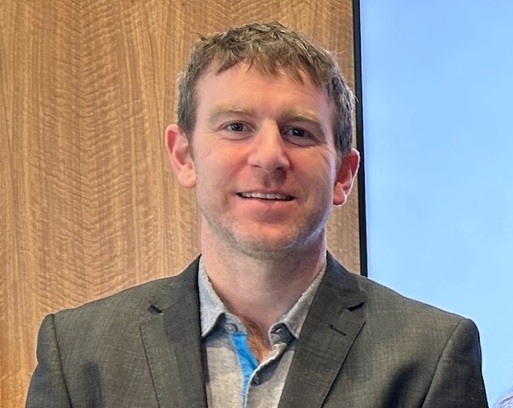
Daniel McNally
How can you describe your current job?
I am now Senior Editor at Nature Materials. The core job of a journal editor is to handle manuscripts. We get about 10 new manuscripts per week per editor. We only send out for review a very small fraction of them. I have to read the manuscripts, understand what the main advance is, where that advance sits in respect to the wider literature, whether it’s big step forward or not. To do that core job you need to stay in touch with the scientific community and understand what they are interested in, what excites them. You do that by traveling to conferences and meeting with scientists. Once you decide whether to reject a manuscript or send it out for review, another very important thing is choosing appropriate peer reviewers. This is where your technical expertise comes into play. If your field is spectroscopy, there are many different types of spectroscopy. You have to understand which one is relevant in that paper. And then you need some theory, and you have to know who would be interested in that. As you evolve, you get involved in additional aspects of the company, you may have to organize workshops, conferences, masterclasses. And that allows you to be part of the community. You are still somehow part of the academic community.
How did the MARVEL experience prepare you for this position?
My time as a postdoc in particular had prepared me well for the kind of conversations that happen during the selection process. I had also gained a lot of experience in reading papers and quickly understanding their main points, which is a requirement for this job.
Was it a big change for you moving from academia to industry?
The first six months of my job were focused on training. I had a person assigned to me to whom I could ask questions, discuss papers. But overall I did not find the change dramatic. You do miss doing your own research. One thing I enjoyed during my PhD and postdoc was working in a small team of two or three people, and becoming close with them. Editorial work is something you do mostly by yourself and can get lonely after a while. You still get to go to conferences and meet people, but you have to take the majority of decisions by yourself. It’s not for everybody, but the majority of people who move into it enjoy it.
What advice would you have for young researchers who are considering a career in industry?
One piece of advice I can give is: if you are attending big conferences, you will find many editors of big journals, and some will have their booths. Go and talk with them, they will be happy to meet you. And read the journals. Go to their websites at least once per week and sit down for at least two hours just reading papers. It will help you if you want to become editor, and it will help your research work in general.