We are pleased to send you the 77th issue of the NCCR MARVEL newsletter
Home    /    Highlights    /    News    /    Events
Newsletter - March 31, 2026

Dear MARVEL'ers,

Please find below our latest newsletter, with highlights, news, and events linked to the MARVEL community.

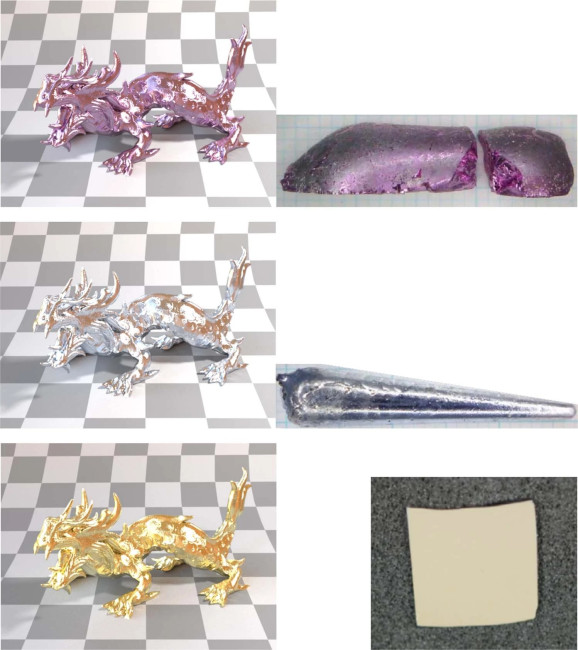
This month, you can discover our fourth success story. After the story of Jacutingaite, the joint effort of theorists and experimentalists in the search for topological materials, and the research on multiferroics, materials that combine a magnetic and a ferroelectric ordering in the same phase, discover how computational workflows can predict the color of metals and metal alloys for the jewellery industry. This idea led to a unique collaboration between computational material scientists and Varinor, a refiner of precious metals based in Delémont.  

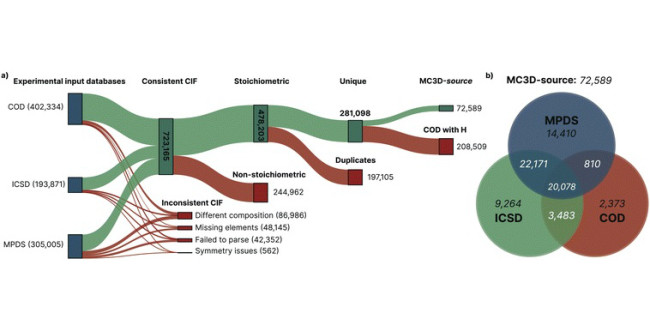
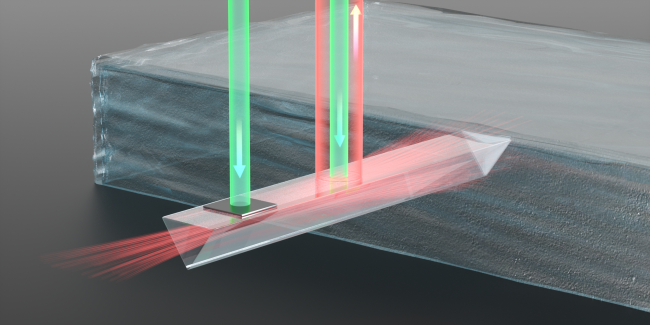
In this month's first highlight, dive into the Materials Cloud Three-Dimensional Structure Database (MC3D), a systematically curated database of quantum-mechanical calculations for inorganic materials derived from experimental crystal structures, containing more than 32 000 structures. The second highlight tells you about experimental and theoretical condensed-matter physicists and materials scientists joining forces to explain and measure how heat is transported in diamond nanostructures, highlighting an unexpected dependence of the heat flow on the size of the diamond structure.

PRX Intelligence, a new journal for AI and machine learning in the physical sciences was recently launched. Current and former MARVEL PIs are involved in it, a recognition of their expertise.

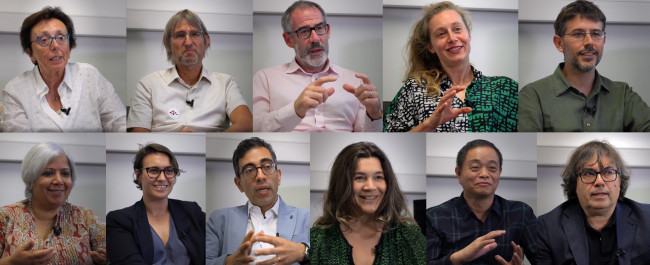
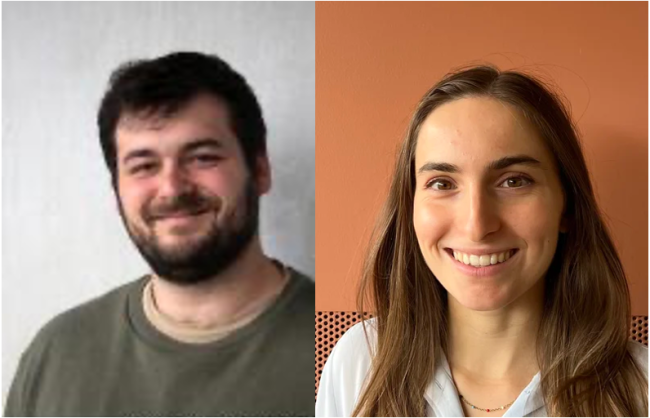
During the Psi-k 2025 that took place from 25 to 28 August in Lausanne, we interviewed several top experts in computational materials science and asked them how they see the future of the field. Now you can find all the video interviews of the series collected together on one page. Read also about the experience of Veronika Lamparská, one of the last MARVEL INSPIRE Potentials Master's fellows.

If not yet done, mark your calendars with our upcoming events, a junior seminar on 17 April (another is planned in May too, stay tuned), the Ig Nobel Award Tour Show on 23 April (tickets available online from 14 April), and the final events of MARVEL. If the registrations for the MARVEL-ICTP College in June are closed, you can now discover the preliminary program of the MARVEL Fest: party-ing away at EPFL on 9 July.
Success story

Predicting the color of metals: a collaboration between MARVEL and the jewellery industry

In 2015, MARVEL scientists collaborated with the Swiss jewellery company Varinor to develop and test a computational workflow to predict the color of metals and metal alloys from first principles. The workflow had four main computational steps: electronic structure calculation with DFT; calculation of the dielectric function with the independent particle approximation (IPA); absorption coefficient and reflectivity; photorealistic rendering. The method could well reproduce the optical properties of most elemental metals, with a few exceptions. When it came to alloys, some were more difficult to simulate than others and new solutions were developed to  simulate some of gold-based alloys that are most interesting for jewellery. The work resulted in multiple publications, and the code and the workflow remain available via AiiDA and GitHub and are open-source. This is the fourth  article in a series about MARVEL's success stories from its 12 years of research. You can read the previous ones here, here, and here.

Highlights

A new database of inorganic materials is available on the Materials Cloud

A team of NCCR MARVEL scientists, led by researchers at EPFL and PSI, has introduced the Materials Cloud Three-Dimensional Structure Database (MC3D), a systematically curated database of quantum-mechanical calculations for inorganic materials derived from experimental crystal structures. The database contains more than 32 000 structures whose relaxed geometry and electronic structure were computed using carefully standardized DFT workflows, using three different functionals and/or computational protocols. Beyond providing a consistent reference dataset for computational materials science, MC3D also supports emerging data-driven approaches. For example, it served as a starting point for the MAD dataset used by Michele Ceriotti’s group at EPFL to train the PET-MAD machine-learning interatomic potential.

Watching heat flow through diamond nanobeams: theorists team up with experimentalists

An accurate description of how heat flows through diamond at the nanoscale is challenging for both theorists and experimentalists. A new article in Physical Review Letters addresses both challenges presents a joint effort involving MARVEL members from the THEOS lab at EPFL. Experimentalists fabricated long suspended diamond cantilevers with a triangular section less than a micrometer in width, and used some luminescent defects in the diamond as nano-thermometers to measure changes in temperature. Theorists then applied viscous heat equations to explain that transport arises in the cantilever from the interplay between different types of phonon interactions – “hydrodynamic” events that conserve the momentum of the crystal - and extrinsic effects determined by sample size and geometry.

Read MARVEL Highlights and Success stories here

What will the future of computational materials science look like?

Watch our collection of video interviews on materials simulation

Over the last few months, we have been publishing in episodes a series of video interviews on the future of computational materials science. The whole series is now available on a dedicated page of the MARVEL website and through a YouTube playlist. Filmed during Psi-k 2025 in Lausanne, the interviews feature former and current MARVEL members and other world-renowned expert in the field who were in Lausanne for the conference. In each interview, they discuss the accomplishments of the last decades, the remaining challenges, the impact of AI and provide some advice to young scientists. With Giulia Galli, Georg Kresse, Peter Haynes, Zoë Holmes, Michele Ceriotti, Shobhana Narasimhan, Michele Kotiuga, Giovanni Pizzi, Viriginie de Mestral, Xingao Gong, Nicola Marzari.

PRX Intelligence

Launch of the APS PRX Intelligence Journal

The American Physical Society recently launched a new journal for AI and machine learning in the physical sciences called PRX Intelligence. Former MARVEL PI Anatole von Lilienfeld is the chief editor, MARVEL director Nicola Marzari is one of the deputy editors, and MARVEL deputy director Michele Ceriotti is one of the associated editors. At the APS Global Physics Summit in March, the editors shared their vision for this new journal in video interview "AI Meets Physics: Inside the New Journal PRX Intelligence".

Junior seminar

MARVEL Junior Seminar — April 2026

Apr 17, 2026, from 12:15 until 13:15, Coviz2 (MED 2 1124), EPFL + Zoom

The MARVEL Junior Seminars aim to intensify interactions between the MARVEL Junior scientists belonging to different research groups – this is held in hybrid mode, in order to maintain in-person contacts and allow off-campus attendees to follow the seminars remotely! We are pleased to propose the 72nd MARVEL Junior Seminar: Zacharie Waysenson (Laboratoire de Physique de l’École Normale Supérieure, Sorbonne Université) and Maria Andolfatto (Laboratory for Materials Simulations, PSI) will present their research.

Equal opportunities 

In a field of science where women are still strongly underrepresented, even at the student level, the INSPIRE Potentials – MARVEL Master's Fellowships aimed to empower excellent female students to conduct their Master's research project in simulation and modelling in a laboratory belonging to the NCCR MARVEL. From 2016 until 2025, with 2 calls per year, 62 fellows were granted for a Master's project in 24 different MARVEL groups in 8 institutions. A major outcome of this initiative is the net increase of women PhD students in the MARVEL research groups.

With the end of MARVEL by the summer of 2026, these fellowships won't continue. Opportunities exist within other NCCRs, such as the INSPIRE Potentials SPIN Master’s fellowships or the young talents fellowship of NCCR Catalysis, and news fellowships may come out with the launch of the 6th series of NCCRs in spring 2026. Stay tuned.

At EPFL, the MX Master fellowship program proposes a continuation to the MARVEL INSPIRE Potentials fellowships. Other opportunities are the INSPIRE Quantum Master Award, also at EPFL, and the INSPIRE Potentials - Quantum Center Master Award, at ETH Zurich. 

This month, you can read about the experience of Veronika Lamparská, discover her background, which brought where she is now and learn about her project within MARVEL.

Have fun with science

Ig Nobel Award Tour Show 2026

Apr 23, 2026, from 18:00 until 20:00, EPFL, Forum Rolex

On Thursday 23 April 2026, with the support of the NCCR MARVEL, EPFL will welcome for the seventh time the Ig Nobel Award Tour Show, with Marc Abrahams and a line-up of Ig Nobel Prize winners. Save the date. The details of the program will be shared later. As usually, a great evening ahead! 

MARVEL closing events

2-week MARVEL-ICTP College in computational materials science

Jun 01, 2026, 9:00 until Jun 12, 2026, 17:00, ICTP, Trieste, Italy

This 2-week MARVEL-ICTP College in computational materials science will take place on June 1-12, 2026 at ICTP in Trieste. The event is dedicated to MARVEL PhD students and early postdocs, as well as students all around the world, with support also for those coming from emerging economies. This will be our core educational event, bringing ~200 researchers to work and live together for 2 weeks.

MARVEL final event at EPFL

Jul 09, 2026, 9:00 until Jul 10, 2026, 13:00, EPFL, Forum Rolex

On July 9-10, 2026, MARVEL final event at EPFL will close 12 years of research and activities on computational materials science. This event will be dedicated to the accomplishments of MARVEL and to the relevance of these to the industrial and technological ecosystem, inviting alumni and key players worldwide in academia and industry, SNSF review panel, scientific and industrial advisory boards, EPFL leadership, and scientific journalists.

Job offers at the University of Fribourg

PhD position on orbital angular momentum, chiral materials and orbitronics at the University of Fribourg & Paul Scherrer Institute

The group of Prof. Michael Schüler at the University of Fribourg and at Paul Scherrer Institute is looking for a motivated and curious PhD student to join the group and work at the exciting frontier of first-principles modeling of orbital angular momentum in solids. The project spans chiral materials and orbitronics — a rapidly growing field with rich physics and real prospects for next-generation spintronic and orbitronic devices.

Professor (open rank) in data-driven materials discovery at the University of Fribourg

The Faculty of Science and Medicine of the University of Fribourg is inviting applications for the position of Professor of Data-Driven Materials Discovery at the Adolphe Merkle Institute (AMI). The AMI is a scientifically independent institute supported by a private foundation and integrated into the Faculty of Science and Medicine of the University of Fribourg. The successful candidate will have an exceptional track record of international research excellence in data-driven materials discovery, appropriate to their career stage. Their research programme should encompass artificial intelligence, machine learning and data-driven discovery methods applied to materials such as polymers, colloids, self-assembled systems, biomaterials and living materials. The deadline for applications is May 31, 2026.

Follow MARVEL
on X @nccr_marvel
and on LinkedIn

You are receiving this newsletter because you have shown interest in NCCR MARVEL activities
Unsubscribe from this newsletter - Newsletter Archives
NCCR MARVEL / EPFL STI PRN-MARVEL / Station 9 / 1015 Lausanne / Switzerland