We are pleased to send you the 79th issue of the NCCR MARVEL newsletter
Home    /    Highlights    /    News    /    Events
Newsletter - June 25, 2026

Dear MARVEL'ers,

Please find below our latest newsletter, with highlights, news, and events linked to the MARVEL community.

This month, discover not less than three highlights. In the first one, discover the many applications of AiiDAlab, from the original usage to simplify computer simulations in materials science to the simulation of the Earth’s atmosphere to battery development. The second highlight presents a systematical analysis of hundreds of atomically thin materials to understand how magnetism emerges and stabilizes at the nanoscale. In particular it reveals the discovery of 12 new half-metals — materials that conduct electrons of one spin type while blocking the other.  In the third highlight, MARVEL researchers have trained an artificial intelligence system to reconstruct very quickly and efficiently the positions of the hydrogen atoms often lacking in the crystal structures of materials stored in databases used by researchers. This opens the possibility to simulate materials more accurately for a variety of applications, from efficient hydrogen storage to new batteries.

The two-week MARVEL-ICTP college as part of the closing events of MARVEL was a great success, bringing together more than 200 graduate students and early-career researchers from 57 countries to learn and explore the state-of-the-art in computational materials science in the era of AI. The slides and lecture recordings are available online. And let's continue to celebrate the journey of MARVEL and the people who made it possible with our final event MARVEL Fest: Party-ing away taking place on 9 July at the Forum Rolex at EPFL. Registrations required by 30 June.

Some other events are coming soon, in particular a CECAM-MARVEL Mary Ann Mansigh Conversation, about Erwin Schrödinger and the challenges of scientific biography on 29 June,  a webinar panel discussion to discover "How can AI unlock innovation in Advanced Materials" including MARVEL director Nicola Marzari on 1st July, and a CECAM workshop to prepare a future thematic node for Materials in the European Open Science Cloud on 13-14 July.

Then it will be time to say goodbye with our final newsletter in July.
Highlights

AiiDAlab: A software to accelerate research

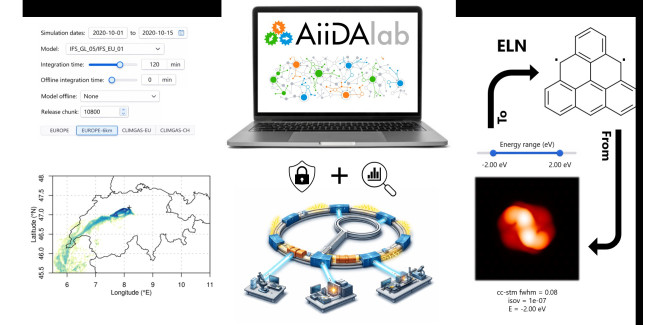
The AiiDAlab software was originally developed to simplify computer simulations in materials science. In a new paper in Digital Discovery, a  team of MARVEL researchers at Empa and PSI have now demonstrated that it is also highly useful in a number of other applications, ranging from the simulation of the Earth’s atmosphere to battery development. At Empa, for example, atmospheric transport simulations controlled by AiiDAlab are being used to quantify Swiss and European greenhouse gas emissions from atmospheric measurements. Empa also uses AiiDAlab for the automated characterization of batteries, where it can coordinate not only simulations but also the execution and analysis of experiments.

Unlocking the Magnetic Landscape of 2D Materials

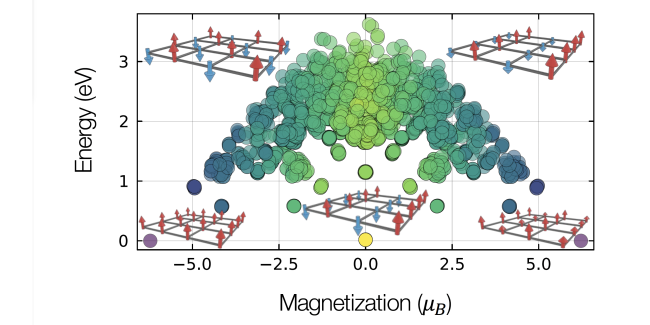
In a study just published in ACS Nano, MARVEL researchers  systematically analyzed hundreds of atomically thin materials to understand how magnetism emerges and stabilizes at the nanoscale. Predicting the magnetic behavior of 2D materials is challenging because they often exhibit complex energy landscapes with multiple local minima, meaning a single material can settle into many competing magnetic states. To tackle this, the team developed an automated computational approach designed to explore this complexity more thoroughly than conventional methods. Among the most exciting results is the discovery of 12 new half-metals—materials that conduct electrons of one spin type while blocking the other. Such behavior is highly sought after in spintronics, an emerging technology that aims to use electron spin, rather than charge, to process and store information more efficiently. These materials could form the basis of faster, lower-power electronic devices.

On the trail of the missing hydrogen atoms

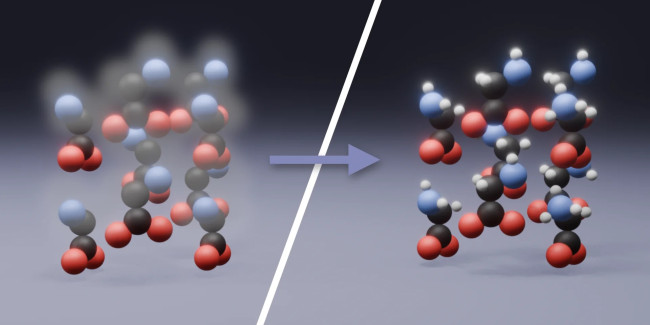
To simulate the properties of materials, researchers use crystal structures of materials stored in databases. Often, however, these lack the positions of the hydrogen atoms. MARVEL researchers at the Paul Scherrer Institute PSI have now trained an artificial intelligence system to reconstruct these positions very quickly and efficiently. Their new method, called XtalPaint, will make it possible to simulate materials more accurately for a variety of applications: from efficient hydrogen storage to new batteries.

Read MARVEL Highlights and Success stories here

Back to the MARVEL-ICTP College: Materials simulations in the age of AI

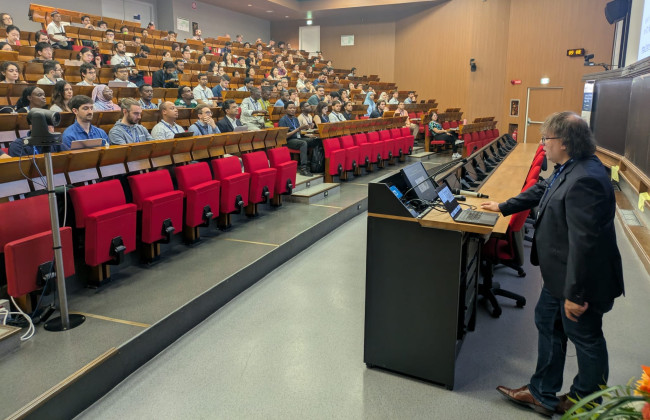
A highly successful materials simulation college in Trieste

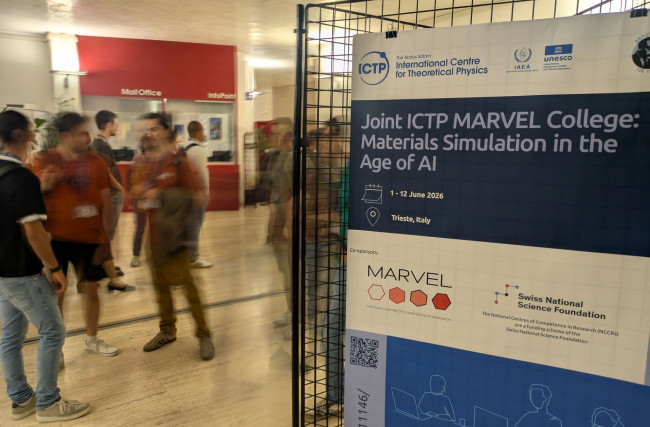
The two-week college on “Materials Simulations in the Age of AI” aimed to bring together graduate students and early-career researchers from all over the world to learn and explore the state-of-the-art in computational materials science in the era of AI, and to forge the next generation of researchers in the field. It was organized by the Abdus Salam International Centre for Theoretical Physics (ICTP) and NCCR-MARVEL. The slides and lecture recordings are available online. 

MARVEL Fest: party-ing away — registration required

MARVEL Fest: party-ing away

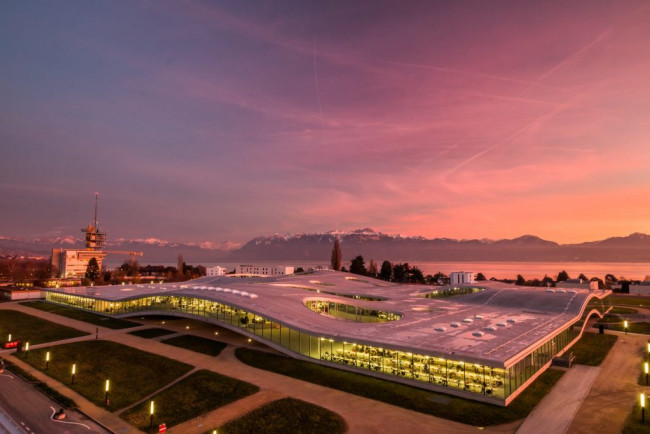
Jul 09, 2026, 9:00 until Jul 10, 2026, 13:00, EPFL, Forum Rolex

On July 9-10, 2026, MARVEL final event at EPFL will close 12 years of research and activities on computational materials science. This event will be dedicated to the accomplishments of MARVEL and to the relevance of these to the industrial and technological ecosystem, inviting alumni and key players worldwide in academia and industry, SNSF review panel, scientific and industrial advisory boards, EPFL leadership, and scientific journalists. Discover the preliminary program of July 9.

Erwin Schrödinger and the challenges of scientific biography

CECAM-MARVEL Mary Ann Mansigh series: Transgressing boundaries — Erwin Schrödinger and the challenges of scientific biography

Jun 29, 2026, from 15:00 until 17:30, EPFL, BCH 2103 and online

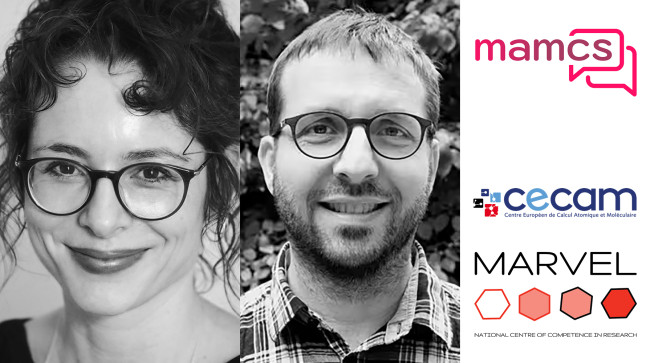
CECAM and MARVEL present a new event in our Mary Ann Mansigh Conversation series. In a discussion with Dr Magdalena Gronau, chemist, and Martin Gronau, classicist and scholar of ancient studies,  both at the Leibniz Centre for Literary and Cultural Research in Berlin, drawing on previously unexamined sources, we will reassess controversy surrounding Erwin Schrödinger’s private relationships and offers a new perspective on his complex personal life, taking into account the viewpoints of his female partners, whose voices have remained largely unheard.

Webinar panel discussion on AI in advanced materials

Webinar: How can AI unlock innovation in Advanced Materials?

Jul 01, 2026, from 14:00 until 15:00, Online

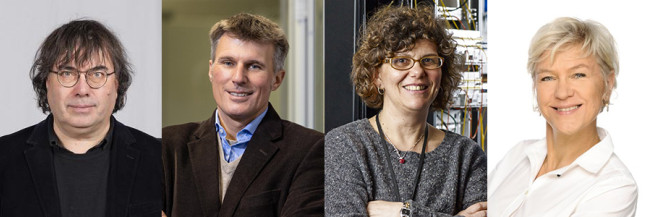
We invite you to join this webinar to discover "How can AI unlock innovation in Advanced Materials". Drawing on recent work in the European Scientific Advice Mechanism, the expert panel will set out the opportunities of AI and other digital technologies in transforming innovation in Advanced Materials. Among the panel members, meet Prof. Nicola Marzari, director of NCCR MARVEL. 

CECAM workshop "MatOSC: shaping together a future EOSC node for Materials"

Jul 13, 2026, 12:30 until Jul 14, 2026, 13:30, CECAM-HQ-EPFL

The "MatOSC: shaping together a future EOSC node for Materials" workshop will take place in Lausanne, 13th-14th July, at CECAM headquarters. The event will be in person and over two half-days, from lunchtime to lunchtime. MatOSC is a project to prepare a future thematic node for Materials in the European Open Science Cloud (EOSC). MatOSC aims to act as the EOSC thematic entry point for materials science, turning today's fragmented landscape of discipline-, technique-, and country-specific materials data initiatives into a coherent, discoverable, and reusable European system of systems. This open event aims to gather prospective providers and users of such a node, to collect needs, identify potential offerings and discuss possible use cases.

Equal opportunities

In a field of science where women are still strongly underrepresented, even at the student level, the INSPIRE Potentials – MARVEL Master's Fellowships aimed to empower excellent female students to conduct their Master's research project in simulation and modelling in a laboratory belonging to the NCCR MARVEL. From 2016 until 2025, with 2 calls per year, 62 fellows were granted for a Master's project in 24 different MARVEL groups in 8 institutions. A major outcome of this initiative is the net increase of women PhD students in the MARVEL research groups.

With the end of MARVEL, these fellowships are not continuing. Opportunities exist within other NCCRs, such as the INSPIRE Potentials SPIN Master’s fellowships or the young talents fellowship of NCCR Catalysis, and news fellowships may come out with the launch of the 6th series of NCCRs in spring 2026. Stay tuned.

At EPFL, the MX Master fellowship program proposes a continuation to the MARVEL INSPIRE Potentials fellowships. Other opportunities are the INSPIRE Quantum Master Award, also at EPFL, and the INSPIRE Potentials - Quantum Center Master Award, at ETH Zurich. 

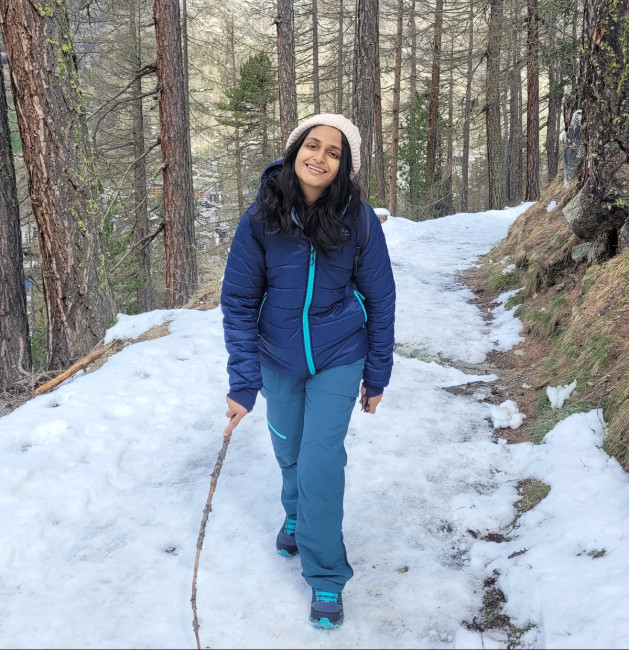
This month, you can read about the experience of Mridhula Venkatanarayanan, discover how having a strong support system of mentors, colleagues, family is very important, especially men who can help bring women to the spotlight, and learn about her project within MARVEL.

Materials success stories and materials research breakthroughs

The Materials Research Society (MRS) is sharing materials success stories and materials research breakthroughs, in the format of postcards highlighting the value of materials successes driven by federal research investment, and the importance of research funding. You can discovers stories, e.g.,  on batteries and batteries recycling, artificial Intelligence and machine learning (how AI is revolutionizing the way we do science), or 2D Materials (their presence in the fundamental research stage and their developments in commercial applications). Read too about materials research breakthroughs in quantum computing or critical materials.

Follow MARVEL
on X @nccr_marvel
and on LinkedIn

You are receiving this newsletter because you have shown interest in NCCR MARVEL activities
Unsubscribe from this newsletter - Newsletter Archives
NCCR MARVEL / EPFL STI PRN-MARVEL / Station 9 / 1015 Lausanne / Switzerland